
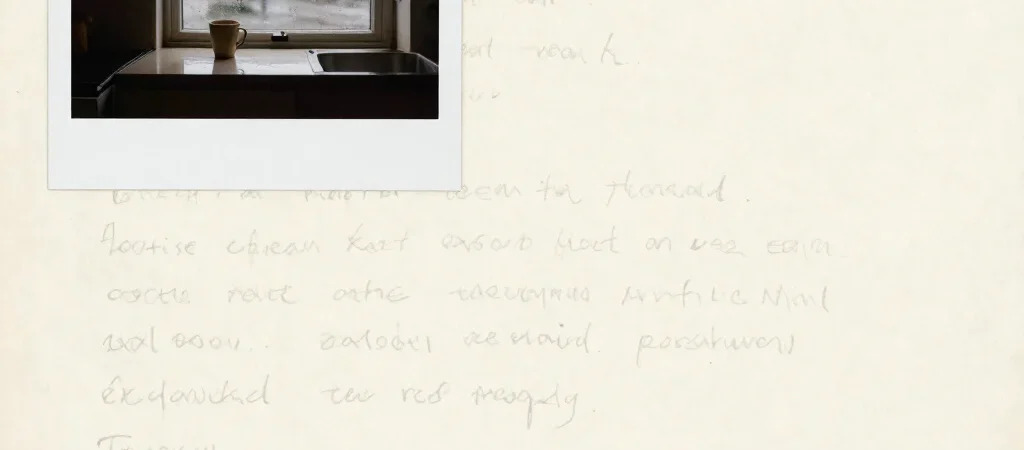
I often know what a picture is about before I know what to write beside it. The temptation is to explain the whole moment, but a photograph already gives the reader something to discover. The writing can bring in the detail that isn’t visible: what happened just before, or what stayed with me afterward.
Start with one real moment
Instead of opening with a broad reflection, choose a specific moment from behind the frame. Maybe the bus pulled away before the conversation ended, or the kitchen window kept fogging while someone made tea. One grounded detail gives the reader a way into the story without turning the image into an illustration of an abstract idea.
Let the sequence carry meaning
You don’t have to explain every picture in the order it appears. A paragraph can connect two frames by naming the shift between them: the room before anyone arrived, then the same room at the end of the evening. Trust the reader to make some of the connection themselves.
Keep a detail unresolved
A strong ending can leave one image in the reader’s mind without summarizing the entire experience. Return to a sound, an object, or a small gesture from earlier, and let it sit beside the final frame. Before publishing, read the words without looking at the gallery, then look through the pictures without reading; both should offer something, and neither should simply repeat the other.