
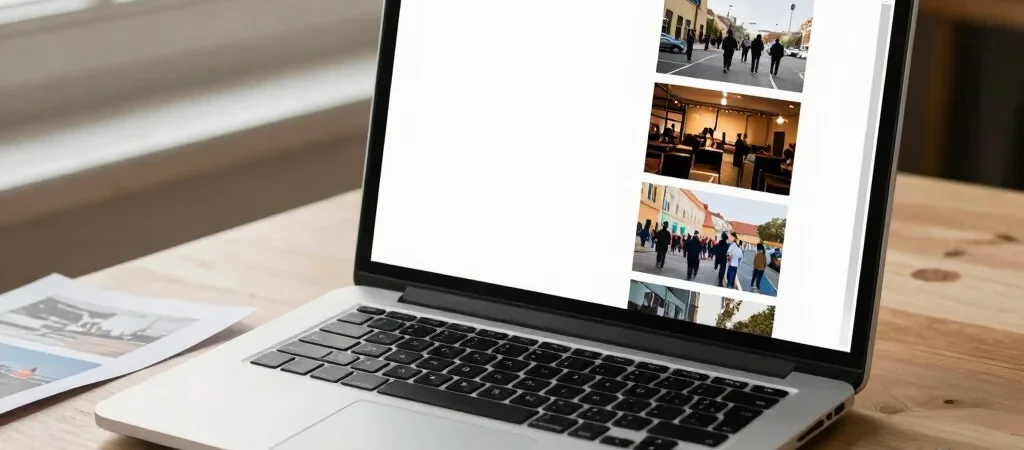
A scrolling gallery has its own rhythm. The reader moves down the page with a thumb or a trackpad, and each new picture appears in relation to the one just seen. I want that movement to feel considered, with enough room to look before the next frame arrives.
Vary the visual pace
A run of equally sized images can make distinct moments feel interchangeable. If the layout allows it, let a broad scene open the sequence, then give a close detail a quieter place of its own. A narrow portrait-oriented image can also interrupt the rhythm in a useful way, especially after a few wider frames.
Place words with intention
A short paragraph between images can orient the reader or mark a turn in time, but it should earn its place. For example, one sentence about the room going quiet can prepare us to look again at the empty chair. Keep captions close to the image they describe, and avoid repeating details the picture already makes plain.
Leave a little silence
Not every picture needs a caption, and not every transition needs an explanation. A small pause of white space can let a face, a shadow, or the edge of a familiar room hold attention. Scroll through the finished page at the speed a reader might; if the images blur together, make more room between the moments that matter.