
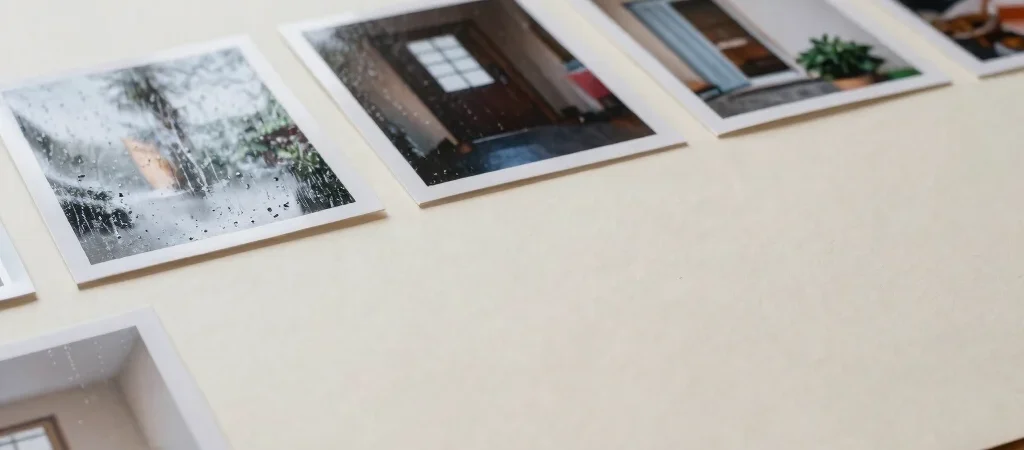
When I’m shaping a picture story, I don’t begin by asking which image is the best. I ask which one gives the reader a place to stand. A half-open door, a hand resting on a windowsill, a street just after rain—small details can make a beginning.
Choose an opening with room
The first picture should offer a clear entry without explaining everything at once. Look for an image with a little space around its subject, so the eye has somewhere to settle before moving on. A close portrait can work, but a wider view may let the reader understand where the moment is happening.
Build a change in distance
After the opening, try moving between wide, close, and in-between views. A kitchen might appear first as a quiet room, then as a chipped mug beside the sink, then as someone reaching for the light switch. That shift gives the gallery a pulse without asking every picture to carry the same kind of information.
Give the last frame weight
The final image doesn’t need to resolve the story neatly. It might return to a place from the opening, or linger on a small detail that now means more because of what came before. Put the pictures in order, scroll through them once without stopping, then notice where you naturally want to pause.